The manufacturing business is somewhat in relation from other industries due to its immense scale, involving substantial product delivery, hardware, and inventory management. This particular industry has undergone numerous extraordinary transformations throughout the long term.
With global competition intensifying, manufacturers have had to adapt their approach to innovation, operations, and customer engagement. In the past, consumers had limited choices, but today, the power dynamics have shifted.
Modern manufacturers must possess a deep understanding of market trends and complexities. The ongoing challenge is to anticipate and deliver products or services that meet customer needs even before those needs are explicitly articulated.
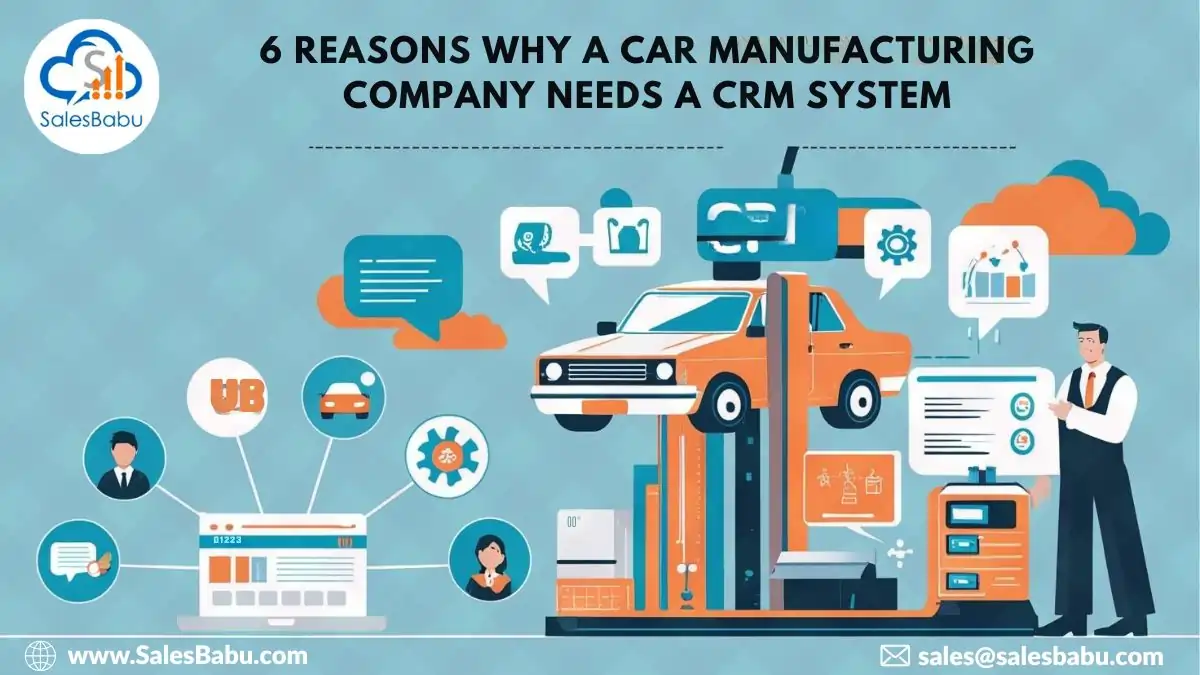
Here are six major reasons why CRM is important to the manufacturing company.
- A 360-degree client view
- A smart production network
- Better estimating and projections
- Straightforwardness into your deals pipeline
- Enhancement of client connections
- Expanded deals and more business

1. A 360-degree client view
Client relationship management in the manufacturing company is a unique advantage, and having a 360-degree view is the capacity to acquire a total and all-out understanding of your client information across individuals and stages.
When a client’s profile is added to your CRM framework, everybody from the client support workforce to salesmen can get to their data, smoothing the handoff from promoting to deals. This guarantees that clients get customized encounters each and every time they communicate with your organization.
In complex B2B purchases, multiple stakeholders are often involved in the cycle. A CRM for manufacturing industries allows you to track several contacts within a single account, organizing them based on their status and decision-making power.
Clients today expect high levels of care, such as 24-hour access and robust after-sales services. A manufacturing CRM system helps monitor warranties, repairs, and service issues, managing daily inquiries effectively. This results in fewer delays, more follow-on sales, and, genuinely, happier clients.
Read More : How CRM Helps Manufacturing Industry
2. Intelligent Production Network
Instead of waiting for customers to interact with their requirements, businesses can proactively forecast demand by leveraging several business software solutions.
CRMs can monitor every order at your customer’s location, granting a detailed record of each customer’s purchase history, order submission dates, and payments. Availing such information, your CRM (or CRM software for manufacturing businesses) can create precise sales particulars by evaluating the purchasing behavior of each customer. Such includes determining peak and off-peak periods, detecting long-term trends, and forming accurate sales predictions for future planning.
Demand forecasting is significantly important for companies functioning in rapidly transformation industries such as technology, electronics, and retail. An assimilated manufacturing CRM solution can considerably minimize the time necessitated to develop a product from the conceptual stage to market delivery, an important factor for outperforming competitors.
3. Enhanced Estimation and Projections
Rather than trusting that clients will let them know what they need, organizations can now figure out what will be sought after before long by utilizing different business programming arrangements.
CRMS can follow each request at your client’s place with the goal you have a full record of every client’s set of experiences, when they submitted the request, and what they paid.
Utilizing these records, your CRM (or CRM software for manufacturing business ) can produce exact deal figures by finding the purchasing behavior of every client, assigning your busy times and personal times, tracking down long-haul drifts, and creating precise deal projections that you can use for future preparation.
Specific interest determining is particularly helpful for firms working in quick-changing ventures like super advanced, hardware, and retail. An assembling CRM arrangement can help makers slice the time expected to foster an item from the idea stage the whole way to showcase conveyance, which is significant for prevailing over contenders.
Read More :10 Reasons why Salespeople need CRM Software
4. Straightforwardness into your deals pipeline
Understanding exactly which part of the pipeline a deal is currently in is pivotal to ensuring it eventually converts. Without a CRM, that visibility often depends on a salesperson’s scribbled notes or memory.
A CRM designed for manufacturing streamlines and simplifies the process. It charts and visualizes data so it is easy to understand. These systems provide summaries of your entire pipeline for a “bird’s-eye view” while also allowing you to drill down into specific records. You can see what stage each opportunity is in and how much each deal is worth.
With CRM programming, you also get pipeline automation. You can define rules that, when triggered, automatically move leads through the various stages you have set up. The system sends notifications when leads hit specific milestones, ensuring your pipeline stays up to date, always.
Read More : CRM Software For Manufacturing Industry
5. Enhancement of client connections
Retaining clients begins with ensuring consistent satisfaction, which CRMs excel at. We know that clients will pay more to get a positive experience with a brand, so you should do everything possible to deliver this.
One of the most significant services a CRM provides is Case Management. It allows your organization to create a ticketing system for tracking, updating, and resolving issues. This offers clients a way to bring attention to problems and ensures no complaint goes unnoticed.
The fact is, clients today expect the same level of service they get from consumer giants like Amazon or Flipkart. Without a CRM, delivering that kind of experience in the manufacturing sector is nearly impossible.
6. Expanded deals and more business
Not at all like other assembling programming arrangements, a CRM is likewise a significant promoting device that assists you with acquiring supporters and clients.
It empowers your showcasing and outreach groups to make nitty gritty reports, thinking about the clients’ way of behaving. Having this window into clients’ purchasing behaviors empowers you to use that information in expanded deals.
Authentic information uncovers the pinnacle request times and margin times for every client. With the CRM information delineated by large information investigation devices, your group can pursue informed choices about when to sell, yet additionally what to sell.
Your outreach group or client achievement administrators can then utilize this data in upselling and strategically pitching.

Conclusion
In these dynamic times, the role of Client Relationship Management has never been more significant. Organizations that leverage CRM specifically for the manufacturing sector can streamline their processes, predict market needs, and deliver unrivalled customer service.